

Buenos Aires

Argentina is a country home to endless opportunities for visiting tourists and a visit to the capital city is not something to be missed. It is often called the “Paris of South America” and with good reason, as this populous city is home to some of Argentina’s most significant cultural sites. With hundreds of museums, an amazing food scene, European-inspired architecture and the highest number of bookstores per capita in the world, this city has something to offer everyone. There is, after all, a reason that this is one of the most visited cities in South America
Argentina is a country where there is something for everyone. Snow-capped mountain hikes? It has that. A luscious green Lake District with perfectly still water? It has that. Waterfalls surrounded by dense rainforest? It has that. Vineyards nestled in the Andean foothills? It has those. The list of opportunities here is endless but one place that often gets overlooked (or tacked onto the start/end of an Argentinian trip) is Buenos Aires.
The country's capital and largest city, Buenos Aires is famous for its well preserved European architecture and rich cultural life. Since the 19th century it has been a desirable location for immigration and this has led to the diverse mixture of cultures fueling the Buenos Aires we see today. Despite being a city easily reached by international flights, Buenos Aires is somewhere that deserves more than to solely be an arrival or departure location.


Things To Do
1. Cementerio de la Recoleta
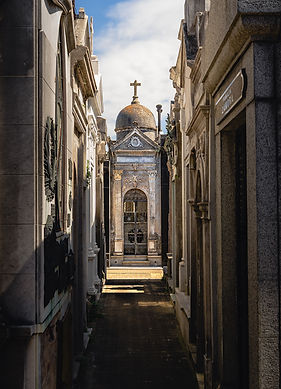
Known more simply as La Recoleta Cemetery, at first glance you might question why this is somewhere we recommend as a must visit when in Buenos Aires. However, the iconic cemetery, located in the historic neighborhood of La Recoleta, is one of the capitals most prominent tourist attractions for good reason.
Established in 1822, having originally been a garden for the Franciscan monks of the Recoleta Order, the cemetery is now a 14-acre plot known as a "city of the dead", courtesy of being home to almost 5,000 above-ground vaults containing some of the country's most famous ex-residents. The mausoleums found here are stacked so tightly together that narrow alleyways form between them, reminiscent of a miniature city with intercrossing footpaths and passageways. The graves themselves are also intriguingly unique - which each one seemingly designed completely different to the next. You will find an array of architectural styles, building materials and colours, with the peculiarity of each structure meaning it is easy to spend a few hours wandering around marveling at every distinct grave.
The cemetery is also the resting place for some of Argentina's most famous citizens, with a map available at the entrance to help you locate these. The most visited grave here is that of Eva "Evita" Perón but you will find former presidents, Nobel prize winners and the founder of the Argentine Navy as you turn each corner. It is also possible to join a guided tour (just note these are in Spanish), where notable graves will be pointed out for you, but we enjoyed the simple peace of traversing the alleyways by ourselves.
Opening Times:
MON-SUN (8am-6pm)
*Guided tours available Tues-Fri (11am & 2pm), Sat-Sun (11am & 3pm) - Spanish only
Cost:
$21,190 ARS per person (£11pp) for entry

2. El Ateneo Grand Splendid
Buenos Aires boasts the impressive statistic of having the highest number of bookstores per capita of any city in the world. In fact, the capital's love for written works led to UNESCO designating it a World Book Capital back in 2011. The jewell in the literary crown is the El Ateneo Grand Splendid.
This impressive bookstore has a history worthy of some of the books it now houses. It was originally built in 1919 and served as a theater, before then being converted to a cinema. In 2000 it was renovated into a flagship bookstore. This new store opted to retain some of the architectural charms left behind by the former theatre. The building retains its original frescoed ceiling (painted by Italian Nazareno Orlandi), ornate carvings, red velvet stage curtains and much of the untouched auditorium lighting. Whilst most of the theatre seats have been long removed, original chairs still remain in the boxes at the sides of the stage, providing a perfect spot for a bit of light reading. Speaking of the stage, it still remains but has been converted into a quiet cafe where you can grab a coffee or a bite to eat.
It is estimated that over a million visitors pass through El Ateneo's doors annually and, whilst this space has definitely become a tourist attraction, it is still very much a functioning bookstore. My wife is a massive bookworm and so we definitely had to visit El Ateneo. It stocks 120,000 books but is free to enter for anyone wanting to marvel at the stunning interior architecture. We visited here as part of a self-walking tour through the historic Recoleta neighbourhood and it was definitely worth it. I was not the only photographer on site either - the upper balcony levels provided a superb vantage point for some panoramic shots of the theatrical interior.
Opening Times:
MON-SAT (9am-9pm), SUN (12pm-9pm)
Cost:
FREE
3. Jardín Japonés de Buenos Aires
Located in the Palermo district of Buenos Aires, the Jardín Japonés is actually one of the largest Japanese gardens in the world found outside of Japan. The gardens themselves were inaugurated in 1967 by the Japanese Argentine Cultural Foundation upon the visit of, the then, Emperor Akihito and his wife.
The gardens are now one of the most visited tourist attractions within the capital city. Inside you will find a cultural centre (where we actually got to experience some free origami), a restaurant and a greenhouse known for its extensive collection of ancient bonsai trees. There is a large lake which itself is traversed by the Divine Bridge, a distinctive red coloured structure that is a hotspot for photographers. Unfortunately it is one of the busiest spots within the gardens and so taking any photos without people in them was almost impossible.
That being said there was plenty to see here; from the impressive Japanese architecture, the beautiful range of flora and animals including koi carp, cormorants and hummingbirds. It is one of the most visited spots in Buenos Aires for good reason and I would definitely recommend a walk through. I would recommend trying to avoid weekends or getting to the entrance early as it can get very congested on the walkways.
Opening Times:
MON-SUN (10am-6:45pm)
Cost:
$18,000 ARS per person (£9.15pp). Argentine Residents $6,000 ARS per person

4. Museo Evita
This charming museum is located within the Palermo district and iis housed within a 1923 mansion known as the Carabassa Building. In 1948, the Eva Perón Foundation acquired the building to create a Hogar de Tránsito (Temporary Home) for women and children with no resources. On 26th July 2002, the 50th anniversary of Eva Peron's death, the building was opened as Museo Evita.
Eva ‘Evita’ Peron was an iconic Argentinian who, as first lady, is recognised as driving sweeping societal changes within the country. The museum is dedicated to her life from her time as a young actress up to her untimely death in 1952. Admittedly, neither of us had heard of Eva Peron before arriving in Argentina but we came away fully enlightened as to who she was and what her role was in shaping the country. The museum was probably the friendliest tourist place we visited in terms of accessibility for English speakers as there was a very informative audio guide that we could use on our phone to guide us through each room. The collection and variation of exhibits was excellent, the storytelling superb and there was a lovely outdoor patio where you could enjoy an Argentinian drink.
There are a number of much larger, more famous museums found in Buenos Aires but we always enjoy visiting somewhere more local where possible and this museum certainly fit that criteria.
Opening Times:
TUES-SUN (11am-7pm)
Cost:
$9,000 ARS per person (£4.60pp)
5. Costanera Sur Ecological Reserve
This 350-hectare (865-acre) protected, biodiverse green space in Buenos Aires is located on the Río de la Plata in the Puerto Madero district. It was actually created, largely by accident, in the 1970s when rubble from city demolitions was dumped here. Over time, when construction work ended, the now abandoned debris was quickly reclaimed by nature and has since developed into a critically important wetlands habitat, home to over 300 bird species.
This was the first sizeable walk that we did in Buenos Aires was around the coastal nature reserve found in the east of the city. We did not really know what to expect from this place given that we had read some mixed reviews beforehand but it is safe to say that we absolutely loved it. Granted, it was a little out of the way to reach (we had to navigate the vast Buenos Aires bus network for the first time to get there) but it was definitely worth it. We walked from the north entrance all the way to the south, at points crossing over some newly installed raised walkways, and what a superb way to spend a day. The place is incredibly green with almost no manmade infrastructure inside, a far cry from the skyscrapers that you can see in the distance. It was a great place to watch wildlife and we saw a whole host of native birds including cormorants, egrets and a couple of very impressive crested caracara, a sizeable bird of prey.
It is a fantastic green space to visit but be warned, the nature here really is at the forefront. You will not find any restaurants or cafes inside so bring relevant supplies with you. We did not experience any but, given it's proximity to water, mosquitos can be an issue here so make sure to pack your insect repellent.
Opening Times:
TUES-SUN (8am-7pm)
Cost:
FREE
Where To Stay
As to be expected from one of the largest cities in South America there are a number of options with regards to the area to stay in whilst visiting. Essentially you will be looking to stay in a specific district (known locally as barrios) and which one you choose can have a big impact on how much you get out of your Buenos Aires trip.
The most popular choice seems to be Palermo. It is widely considered the trendiest part of the city, subdivided into areas like Soho and Hollywood. Here, you will find tree-lined cobblestone streets filled with designer boutiques, world-class cocktail bars and the city's most famous steakhouses. It is a very safe and walkable area with a high concentration of boutique hotels, as well as having excellent transport links to other areas of the city. We actually stayed in an AirBnB apartment within Palermo during our visit. We found the whole area very pleasant, with no issues walking around during the day and early evening. The transport links were very much appreciated and we easily got both buses and metro with ease.
Another good choice for a place to stay is just around the corner from Palermo, the district of Recoleta. Recoleta is often referred to as the "Paris of South America" for its grand French-influenced architecture and wide avenues. This neighborhood is home to many of the city’s luxury five-star hotels and cultural landmarks, including the famous Recoleta Cemetery and the National Museum of Fine Arts. It is arguably the safest and most upscale part of the city, offering a quieter, more sophisticated environment than Palermo. It is perfect for travelers who enjoy high-end shopping, elegant cafes and a more relaxed pace while still being centrally located near major landmarks.
In our opinion these two districts mark the best options for where to stay. Some other blogs will recommend San Telmo but we found it to be a little further away from the key sights without any major gains - just do a day trip here if it somewhere that you wish to see. It is also worth mentioning the city’s "villas miserias," which are the informal settlements or shantytowns that can be found across Buenos Aires. There are a number of them but if you stick to the main tourist areas you are unlikely to come across any directly, which is a positive thing as these are not areas you want to find yourself in. The main one to be aware of is right next to the main train and bus station in Retiro. Whilst a map might suggest that walking from the station to Palermo or Recoleta is easily achievable based on geographical distance, I would highly advise that you do not as it will take you through, or very close to the settlement in Retiro. If you need to go to the station just do what we did, take a taxi.

Location Tips to Consider
-
The districts of Palermo and Recoleta offer the most walkable, well connected areas within Buenos Aires.
-
If staying in Palermo, we would recommend anywhere near Museo Evita for the Ecoparque. This little section of the district was extremely walkable and quieter than some of the more popular Palermo areas.
-
If you are after somewhere more vibrant then select somewhere either side of Avenue Juan B. Justo (Palermo Hollywood is to the north of this road, Palermo Soho to the south).
-
If opting for Recoleta then anywhere between the cemetery and El Ateneo Grand is a good bet. Just be aware that you do not want to be too close to Retiro and the aforementioned informal settlement there.

Where To Eat
Buenos Aires is a city built around a significant food and drink culture, so finding somewhere to eat here is not much a challenge. There are a wide variety of restaurants with something to suit everyone. You can easily find worldwide cuisine, high-end fine dining, chains and local eateries all within walking distance of one another.
We found that we were able to make reservations for some places online (provided that they had a sufficient website) but others we simply walked into. As with most places here in Buenos Aires, there was not loads of English spoken within the restaurants we visited and so learning some basic transactional phrases would be very beneficial.
BEST FOR A MEAL
01
Pizza DATA
Definitely our favourite meal whilst in Buenos Aires, which is saying something considering pizza might not be everyones first association with Argentina.
This streetside pizza place was superb and whilst it has no seating we enjoyed eating standing up at their roadside tables. We had a pepperoni pizza and a chicken one, with both being truly excellent. All the ingredients tasted particularly fresh and they offered takeaway as well if that is more your thing.
Opening Times: MON-SUN (12:00-01:00)
Cost: £5pp (one whole pizza plus soft drink)
02
La Boqueria Palermo
There are a number of high-end steak restaurants found within Palermo but this was the one we opted to visit. This one has everything that you would expect from an Argentinian steakhouse; including delicious meat and empanadas. Like most of the steak restaurants in this area of the capital, food is not as cheap as you might expect but the quality was excellent (plus they have a regular happy hour with a superb wine selection). That being said, in comparison to what we would get back home for the same price, this place was a bargain.
Opening Times: MON-SUN (12:00-01:00)
Cost: £15-30pp (main plus non-alcoholic drink)
BEST FOR A SNACK
01
HALINA Cafe
This small, locally run cafe is located close to Museo Evita. It offers a very extensive menu perfect for a brunch or light lunch but we actually went here for their famous lemon meringue pie! With a quiet, locally run atmosphere and on-street seating this is definitely somewhere we would recommend.
Opening Times: MON-SAT (07:00-21:00)
Cost: £3pp (slice of cake and a hot drink)
02
MADRE Pan
This one was tough to pick just one place because we visited a number of incredibly good bakeries in Buenos Aires. In the end I opted for MADRE for one reason, and one reason only - their cinnamon roll was one of the best we have ever had, and it was the size of Catriona’s head, literally…
Opening Times: MON-SUN (09:00-20:00)
Cost: £1.50 per cinnamon roll
J | F | M | A | M | J | J | A | S | O | N | D |
|---|---|---|---|---|---|---|---|---|---|---|---|


.png)
.png)


Best Time to Visit
Buenos Aires does not really have a ‘peak’ tourist season and so you can generally get good hotel deals year round. That being said the Argentine summer (December-February) can see prices increase for accommodations and travel. Christmas and New Years are fairly well celebrated in the country and can been one of the most expensive times to visit. The end of February coincides with the carnival season in Buenos Aires, which often attracts extra visitors, and so prices can again increase. The cheapest time of year to visit the capital is winter (June-August). This is when the city has its least amount of international tourists and so can be the best time to get good prices on accommodations.
Buenos Aires is situated fairly northerly in Argentina and so the weather never becomes extreme enough to warrant not visiting. Whilst heavy snowfall can make southern parts of the country inaccessible, the capital rarely experiences snow and so it is easily feasible to visit all year round and still experience comfortable weather.
The summer months (December-February) bring with them the least amount of regular precipitation but the temperature during these months can be very overwhelming. Temperatures will easily average 30-32°C and this, coupled with very high humidity levels, can make it feel a bit oppressive. Whilst it is unlikely to experience much continuous rain during these months, summer is prone to sudden, intense thunderstorms.
Autumn (March-May) sees temperatures drop throughout the city, with averages operating at a much more mild 15-24°C. Rainfall does increase but this again is usually limited to short, sharp showers with March often being the wettest month. The humidity also drops but less clouds overall means you can expect the most daily sunshine hours of the year.
The winter (June-August) are often the driest months of the year but that is not necessarily a good thing. Whilst rain in Buenos Aires falls as heavy showers for most of the year, winter can see overcast drizzle take up most of the days - you will not see much sunshine at all. Temperatures also fall to their lowest of the year, with an average of 7-15°C.
Spring (September-November) sees things begin to warmup again and the sunshine return. Conditions here are much like they are in Autumn and are why I would recommend the the Spring and Autumn seasons as the best time to visit Buenos Aires. We travelled to the capital at the end of September as it was the first stop on a year long adventure. We found the weather to be very pleasant; with plenty of sunshine, comfortable temperatures and very little rain. A number of the best attractions are indoors, so good weather is not necessarily a prerequisite but it did make it much more pleasant to explore some of the city’s excellent green spaces. It also meant we had arrived well before the peak summer tourist season, which resulted in nowhere being unmanageably busy. In reality you are likely visiting Buenos Aires as part of a bigger Argentinian or South American adventure and your other destinations should have more of an impact on when you decide to travel, especially since you can feasible visit the capital city all year round without missing out on too much.
Currency
The currency in Argentina is the Argentine peso (ARS). That is where the simplicity of this currency ends however, as things can get a little confusing. For starters the currency uses the same dollar sign ($) as the US - which becomes an issue given most places are actually willing to receive USD in cash. As you might have heard in the news, the peso itself has experienced severe inflation throughout its history and has led to long periods of economic instability for residents of the country.
When we visited the Argentinian peso was at an all-time low and so many establishments preferred to be paid in USD (despite this not officially being allowed) since the local currency had little to no value. It also meant there was an official and an unofficial market for currency exchange. Using the unofficial methods saw us receive ridiculous value for money but it did make exchanging money very challenging - many exchanges in Buenos Aires would simply pretend to not have currency if we tried to exchange British pounds or Euros but it would then magically appear when we produced USD cash. The other option for getting the unofficial rate is to use the “blue dollar” exchanges, which are essentially private money lenders. If you are confident on your mathematics these can get you the best exchange rate but they can be risky for tourists as they are basically under-the-counter money exchangers. A new government has been installed since our visit and they have made big attempts to stabilise the peso - that being said, it is definitely something to bear in mind and do some research on before visiting.
You can pay on credit/debit cards in most places but this will reflect the "official" exchange rate - the one that does not give you the best value for money. Your best bet is to take USD (ideally crisp, new $100 notes - most places do not want old notes) and change them at one of the many Western Unions for pesos - there is just no guarantee this will work first time and you will likely have to queue. There are very few ATMs and so do not plan to simply withdraw cash when you arrive - getting cash in Buenos Aires is a much more complicated process than that!
Language
Spanish, as it is in a lot of this part of the world, is the official language here. The Spanish here is slightly different from other Latin American Spanish in that it has a number of distinct Italian influenced sounds and slang. That being said, if you can converse in Spanish then you will be absolutely fine. We were maybe a bit naive since Buenos Aires was the first stop on our travels but we were really surprised at how little English was spoken in the capital. Whilst the locals really appreciate attempts at speaking Spanish, most of the time you will find it being a requirement over a courtesy - you came to a Spanish speaking country after all!
Safety
I hope it goes without saying, but you always need to ensure you stay vigilant and street-smart when travelling, we would never want anyone to find themselves in danger as a result of us stating somewhere was 'safe'.
Argentinian locals were approachable and friendly, with most just being intrigued by our presence. As mentioned above we walked a lot in Buenos Aires as well as used multiple methods of public transportation with no problems. That being said, Buenos Aires is a place where you will see locals wear their rucksacks on their front and it is very advisable to keep an eye on your belongings - especially in crowded spots as pick pocketing and petty theft is a bit of a concern in certain areas. As talked about in the location section Buenos Aires has some very areas that, just like in any major city, it is worth avoiding as a tourist. One of these is found right next to the main bus station so do not attempt to walk there, especially at night, just get a taxi.
All that being said we had no problems and we do not want to dissuade you - we lived in London for ages and we would take similar precautions there. Just be aware of your surroundings and keep an eye on your belongings, apply some street smarts and you should be all good!
Public Transport
In Buenos Aires we used local buses and the metro system fairly regularly since it was easy to look up routes/bus times online. Both these transport methods were a lot cheaper than taxis but almost exclusively used by locals and so you will definitely need some Spanish if you require help once on board. In order to pay you need to acquire a (stupidly elusive) Subte card, a pre-loadable card. We found these cards genuinely difficult to locate with many places not having any in stock - we eventually found a pair and then were free to travel on the buses to our hearts content, which turned out to be quite a lot!
The local taxis are a good way to get around Buenos Aires but they are not particularly cheap. Uber is also available and we used this in the capital a few times as it was not any more expensive than the local taxi option.
How To Get There
Buenos Aires is not a difficult destination to access and, if you’re planning to visit anywhere in Argentina, it is likely you will have to at least transit through the capital.
The easiest way to reach Buenos Aires is by air. The city has two airports, Ezeiza International Airport (EZE) and Aeroparque Internacional Jorge Newbery (AEP), with hundreds of flights departing and arriving daily.
EZE is the city’s main international airport and intakes long-haul routes from North America, Europe and New Zealand as well as from various destinations in South America. It has three terminals but is located a little out of the city meaning that you will need to arrange a transfer to accommodation which will likely take around 45 minutes.
The smaller AEP primarily serves domestic flights although it does run a number of international flights to neighbouring countries such as Brazil, Chile and Uruguay. This airport is actually busier than the larger EZE, often seeing more passengers pass through on a yearly basis. This airport is also situated very close to the city centre so it makes an excellent arrival point should you be able to organise your travel itinerary accordingly.
As mentioned before, Buenos Aires has a very large bus terminus. You can get a bus to/from here direct from pretty much any of the major Argentinian cities. It is also possible to get bus transfers to/from a number of neighbouring counties but, be warned, these will often be overnight and consist of a significant number of journeying hours. The main bus station is in Retiro and, as mentioned before, remember to get a taxi to/from here as it is not an area you want to be walking around, especially at night.
The other option for arriving in Buenos Aires is to do so by boat. International ferry cruises often include Buenos Aires as part of a South American itinerary. The main ferry point is also found in the Retiro district making it easy to see many of the city’s best tourist attractions if on cruise. The most common way to arrive by water however is from Montevideo or Colonia del Sacramento in Uruguay across the Río de la Plata. Two major companies operate these routes: Buquebus and Colonia Express (we actually used the former for a day trip to Colonia) which makes arriving from Uruguay a logical way of structuring your itinerary. Be warned the immigration process can be rather slow for these boat transfers and a number of them are for foot passengers only.
The easiest way to arrive in Buenos Aires is by plane; there are so many international and domestic flights landing within the city on a daily basis that you are spoilt for choice. We begun our year long adventure here because we were able to secure a relatively cheap, direct flight to Buenos Aires from London Heathrow and the subsequent connection possibilities made it a superb starting location.

Where To Next?
If you are planning a trip to Buenos Aires it is likely you are doing so as part of a longer/larger adventure. The city is superbly well connected which, alongside its wealth of attractions, makes it a perfect stopping point as part of a wider itinerary. Below are some suggestions for where you could travel to next.
1
Colonia del Sacramento, URUGUAY
A direct ferry, taking just over one hour, connects Buenos Aires to the Uruguayan town of Colonia del Sacramento. This tourist spot is famous for its colonial ruins and picturesque cobblestone streets. We actually visited here on a day trip from the Argentinian capital (spoiler, it is definitely worth a visit) but it is entirely feasible to travel to Colonia del Sacramento and start a wider Uruguayan adventure.
The other option is to travel on a ferry to Montevideo, the Uruguayan capital, where you will have access to even more travel options and accommodation choices but this requires a far more significant transfer in terms of time compared to a simply trip to Colonia.
2
Encarnación,
PARAGUAY
If you want to visit a country that has very few tourists then a trip to Encarnacion in Paraguay makes a logical next step from Buenos Aires. Whilst there are actually no direct buses you can get one from the Argentinian capital to the riverside city of Posadas (around 10hrs and often overnight). A local, very straightforward, bus will help you cross the river (and border) into Paraguay where you will come across the town of Encarnacion.
A favourite for Argentinians at the weekend this city has a lovely riverside beach, some great food spots and easy access to the only UNESCO World Heritage Site in Paraguay, the Jesuit Missions of La Santísima Trinidad de Paraná and Jesús de Tavarangue.
3
Patagonia, ARGENTINA/CHILE
Many people travel to Buenos Aires before departing south for a Patagonian adventure. Patagonia itself is not technically a country but more so an undefined region that encompasses the southern tip of both Argentina and Chile.
To get south you will likely be taking an internal flight but it is feasible to get a bus transfer all the way (but you will be looking at 24hrs+). Patagonia is not an area you want to miss, it has some of the most outstanding scenery we have ever seen and is definitely bucket list worthy.
4
Mendoza,
ARGENTINA
Probably the most logical option (one that we don’t even consider though would be to travel somewhere internally, and nearby, within Argentina. As mentioned before Buenos Aires is extremely well connected and you can get direct buses to any of the major cities with ease.
Cordoba is another large city that offers similar experiences to what you can find in the capital whilst Salta in the north offers a more cultural, arid landscape. The most popular next step would likely be the famous wine region of Mendoza.
.jpg)
.jpg)
